Create

So God created human beings in his own image. In the image of God he created them; male and female he created them.
Genesis 1:27

IMG_6680 Our God is infinitely creative.  Every person, every fingerprint, every leaf and snowflake is unique.  A new creation.  Rocks, buried in the ground, formed in every color of the rainbow, so striking and beautiful that we dig them up and hang them around our necks.  The blood hidden in our veins, red.  The sky, a soaring canvas of blue.  The leaves, an engrossing progression of green, and then, all of a sudden, golden.  Why?  If efficiency were God’s key value, then we would probably live in a mosaic of beige.

Then there is food.  the brightness of a tomato, the richness of 2014-11-14 11.52.19chocolate, the liquid velvet of wine.  Things didn’t need to taste good, God created them to.  And sound.  The whisper of wind through the treetops, the chatter of the birds, the wrenching beauty of music.  Our God wasn’t interested in being functional when he created this place we inhabit.  His goal was beauty.
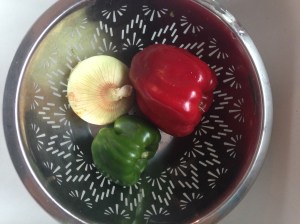
I’m tired of living a utilitarian life.  I want to be surrounded by beauty.  I want to make a discipline of finding it wherever I am, and then choosing to marvel.  At home, I want to create a space inhabited by beauty.  Not necessarily by buying expensive things, but instead, arranging the things I have purposefully, so that there are glimpses of beauty all around.

Another thing to note.  God made me as a person intensely creative.  I am just now beginning to recognize that not 2014-11-03 16.31.14everyone is built this way.  I have a burning need to create.  To think new thoughts.  To do new things.  To create art, to write out words, to sing songs and to… make stuff.  I am not trying to brag at all, by the way.  There is just a lot of stuff inside me that needs out.  And when I go to long without indulging my need to create, I get antsy.  Itchy.  Another word that rhymes with itchy.
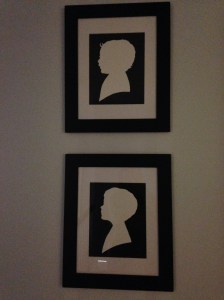
The easiest way to ease the pressure?  Make stuff.  Crochet a hat.  Plan a youth event.  Write a poem.  Paint a picture. This year, I want to make a weekly (daily?) discipline of exercising my creativity.

Here is another truth.2014-12-31 21.12.55  When I make stuff, I can give stuff to people.  Why not use my need to create as a way to bless others?  For me, it is not so much about the end result as it is about the process.  Case in point: this blog isn’t so much about you reading it as it is about me writing it.  If I create a painting- give it to someone who needs to know they are loved.  If I make a scarf, let it be a hug for someone who needs it.  Why not?  God creates, and we are the beneficiaries of it.  When you think about it that way, it seems like giving is inextricably linked to making…
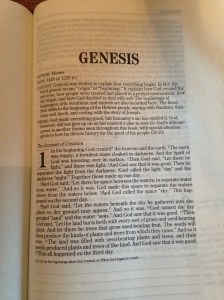
our God.

I have always had a close relationship with God.  Growing up, I never knew a time when I didn’t belive, when I didn’t know Jesus.  I started reading my Bible when I was young.  My faith has sustained me through  the hardest times of my life.

However, I always felt like my faith was a private thing.  I didn’t often talk about my prayer life, about my time spent reading my Bible, or in devotions.  People knew I was a Christian, but the everyday mechanics of my faith felt like an intensely private thing to me.  The heart of this was good.  I didn’t want to alienate others, or make others feel intimidated by my relationship with God, or feel like they had to compare their walk with mine.

However, in that privacy, a seed of sin was planted.  A tiny sprout of pride grew, and its roots settled into my heart.  It looked spiritual, and sounded virtuous, so I didn’t recognize it for what it was.  But when I read about Mary finding favor with God, or David being a man after God’s own heart, I smiled inwardly, feeling that I had a place amongst this elite club.  I read my Bible cover to cover every year.  As years passed, and I had read my Bible 10, 11, 12 times, I began to feel as if I had this God stuff figured out.  It’s ironic, because I didn’t share my devotional practices with anyone because I didn’t want to seem to be bragging.  And yet, my heart was as prideful as they come.

As I have written before, last year I intentionally DIDN’T read my Bible through.  I spent the entire year in John.  Reading a verse at a sitting, instead of many chapters.  It was hard.  Incredibly hard, I felt a nagging voice in my head telling me that I wasn’t achieving enough for God.  But, for the first time, I was talking openly about my faith.  I started speaking with a spiritual director.  I started this blog.  I forced myself to say out loud that I have read the Bible all the way though.

And as I let the light in, I see my faith for what it is.  Strong.  Ordinary.  Treasured.  Human.  SO much more dependent on God’s faithfulness to me than mine to Him.

IMG_6647As the year began to draw to a close, I found myself wondering what was next.  Read another book?  Slow or fast?  What was I to do?  And then God answered.  I was meeting with a girl from the youth group, and she was asking me about how to read the Word of God.  We decided to read the Bible this year together.  Meeting every few weeks to talk about it.  Devotion, with fellowship.  Accountability.  Engaging together with scripture, and with God.
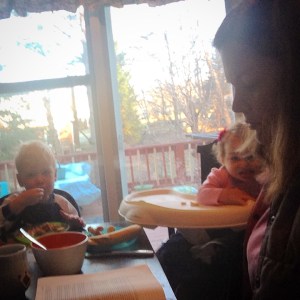
This is how our faith is meant to be.  Don’t get me wrong- our God is PERSONAL. You can’t read scripture and not see that (check Psalm 139 for proof).  But our faith is not meant to be private.  God instructs Christians as a community.  In scripture, most of the time when we read the word ‘you’, it is meant to be plural, not singular.  John Dyer explains this concept better than I can..

…Since the Protestant Reformation we’ve tended to emphasize the salvation of the individual and, with inverse proportion, downplayed God’s work in the Church as a community of people.

There are, of course, many reasons for this, but I think that two technologies (i.e. human inventions) have exacerbated the issue: (a) The technology of the book which encourages us to encounter Scripture textually in isolation rather than orally in a group; and (b) The technology of the English language (again, a human creation) which doesn’t have an agreed upon second person plural and therefore discards or hides important biblical data.

The scriptures were originally shared orally, told from parents to children, passed along in community.  Then, the New Testament was written, primarily in letter form… intended to be read aloud in church, and then passed along to other communities of believers.  With invention of the printing press, the Bible was put into the hands of the individual.  A priceless gift, don’t get me wrong, but one that can make us forget that we are to practice our faith in community.

So my resolution this year is to read my Bible.  In community.  In fact, I have begun reading it at the breakfast table, with my two kids right there.  So that they can see their mother read the Word of God.  And I am going to talk about it.  With my teenage friend.  And with others.  I am going to dive deeper into friendships, say the hard and vulnerable things, and try and allow others to really know me.  I am going to continue with Spiritual Direction.  In sum, continue to have a PERSONAL faith, but no longer make it PRIVATE.  It’s scary.  But here I go… IMG_6701

the Garden

photo (9)

Now Judas, who betrayed him, knew the place, because Jesus had often met there with his disciples.
John 18:2

A lot of times I get the feeling that I am an expert on Jesus.  After all, I have been a lifelong Christian.  I have read the Gospels.  I can spout couplets from the Sermon on the Mount, and I have heard the teachings of Jesus discussed in countless sermons, books, Sunday school lessons, small group conversations.

But all I know of Jesus is what is printed in the Bible.  The disciples knew the real man.  Spent countless hours with him.  Judas knew to find Jesus in the garden, because Jesus was there so often.  It was their ‘place.’

photo (8)Where is your place with God?  

Do you have a ‘holy chair’, a regular meeting place where you go to be in God’s presence?  While that piece of furniture or corner of your house may not be holy in itself, the moments created there are.  I think that there is a great value to ritual.  Research has shown that our recall ability is improved when we are in a similar context as we were when the memory was made.  But  I would make the argument that we can condition our minds to focus as well.  Returning to the same spot, brewing the same mug of hot tea, murmuring the same prayer, all these can serve as markers for our minds, prompts to put us in a mental space to encounter the Holy.

Who do you meet with on a regular basis?

If you know me, this is a drum that I beat often.  Perhaps it is because I work at a church, and so Sunday mornings are often work days for me, but I really feel that my small groups are where I grow in my faith the most.  Sitting with a group of trusted people and wrestling with the Word together.  Talking through the real life struggles of being a wife and a mother and a worker and a Christian.  Admitting when we don’t know things, and working together to find God’s truth.  I think Jesus met regularly with his disciples because this is how we grow.  So who do you meet with?

Flipping the Switch

So… relationships can be hard for me.  It takes me a long time to warm up to people, and really let them in.   I will let pretty much anyone know facts about my life, but to see the real emotion and vulnerability behind those facts, that takes time.  Time measured in months and years, not minutes.  This is not something I particularly like about my personality, but I don’t know how to change itswitch.

I’ve been hurt by friends over the years, and it has caused me to develop a coping mechanism I call ‘flipping the switch.’  If I perceive that a friend is checking out of the relationship, or that I am bothering them, I’m gone.  I emotionally flip the switch.  I’m still nice, present, pleasant… the friend may not even notice the difference.  But I do.  I’m out.  This is NOT how Christ calls me to live.  I think about Judas, at the Last Supper, in the days and months before that.  Jesus still allows him to be one of his circle.  He still invites him to the table.  Judas hears the same words, feels the same blessing as the others, even though Jesus knows what he will do.  Let’s be honest, no slight or hurt from my friends can compare to being sent to your death on the testimony of on of your best buddies.

Flipping the switch may keep me safe, but it also keeps me alone.  I am not practicing hospitality, not investing in community, when I intentionally hold myself back from a friendship.  I have noticed another thing too- if I know a relationship is time limited, I never even consider investing in it.  If I know a friend is moving away, leaving my bubble, or in my life for just a season, I don’t want to let them into my inner world.  I don’t want to risk the inevitable hurt and heartache of goodbye.  So instead, I cheat myself out of a chance to be known, to truly know someone else.  All because I am afraid of the goodbye.  This, I am certain, is not what God wants.  This is my hidden sin.  Because here is the truth: we cannot be held accountable unless we allow people to see us.  See the real us, our hearts, our hopes, and our faults.

A friend is always loyal, and a brother is born to help in time of need Proverbs 17:17

I think that when God calls us to live a life of hospitality, he is asking us to let people in, not only to our homes and our lives, but to our hearts.  For our good, and for theirs.  We must risk pain, risk rejection, risk loss, in order to gain the companionship and the accountability we need.  When I feel the knee jerk impulse to check out of a friendship, I need to notice.  To examine the situation.  To fight it, and to lean in deeper.

But how do you do that?  How do you keep the switch from flipping?